Rents are finally falling in some parts of the country. Here’s who is actually feeling the relief.
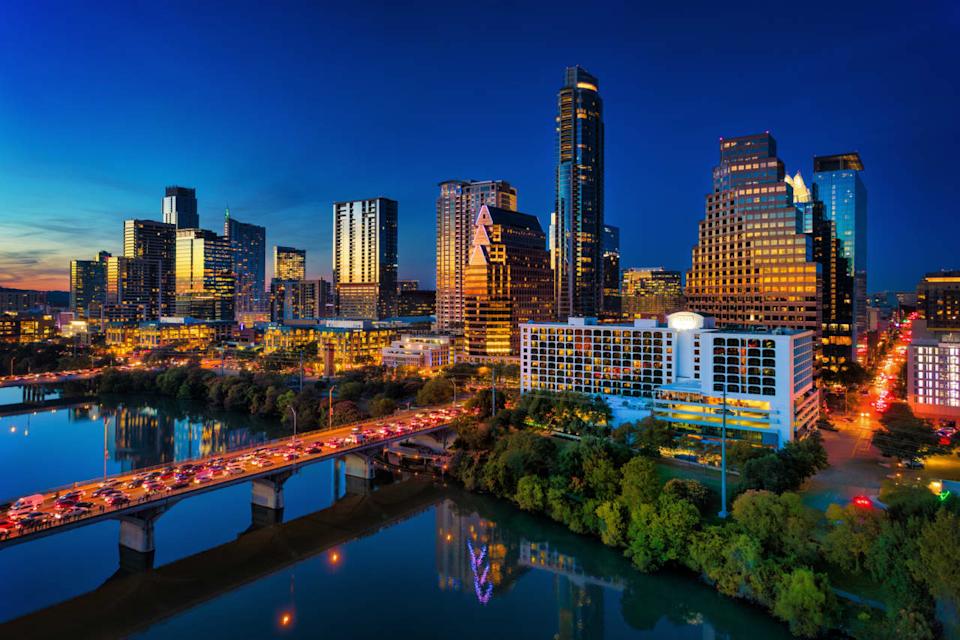
Rent prices are finally falling in many cities across America, including Austin, Texas. So why does the cost of housing still feel so expensive? – Getty Images/iStock
After years of skyrocketing, rents are finally cooling off — and even falling — in cities across America. So why does housing still feel so expensive, and who’s actually benefiting from the price drop?
Fresh inflation data on Friday revealed that between January 2025 and January 2026, rents of primary residences went up 2.8%. That increase was smaller than in the previous month, when rents went up 2.9% annually.
The January figure was also markedly lower when compared to early last year. Between January 2024 and January 2025, rents were up by 4.2%. Before the pandemic, that figure was largely below 4%.
In other words, the increase in rents this January was the smallest since 2021 — during the pandemic — and even below prepandemic trends.
That means that “real income growth from falling inflation and rising wages will boost purchasing power,” Jake Krimmel, a senior economist with Realtor.com, said in a statement.
“And with mortgage rates steady around 6.1% for several weeks now, everything is moving in the right direction for improving housing affordability heading into spring,” he added.
(Realtor.com is operated by News Corp subsidiary Move Inc.; MarketWatch publisher Dow Jones is also a subsidiary of News Corp.)
The average rate on a 30-year mortgage fell 6 basis points on Friday, to 6.04%, after the release of the inflation data, according to Mortgage News Daily.
But the national housing market is still stuck in a crisis of affordability. Home prices and rents seem out of reach for most Americans, primarily due to large increases that occurred during the pandemic years.
People’s incomes didn’t grow nearly as fast as housing costs did during that time, according to a new analysis from the Federal Reserve Bank of St. Louis. “In most U.S. counties, the cost of buying a home has pulled decisively away from what local incomes can support,” Fed researchers wrote.
In the wake of a jump in rental-housing supply, rents are slowing down after a period of intense growth — but price drops don’t feel like much of a win for most renters.
Nationally, single-family rents have more or less stalled. As of November, single-family rents only grew 1.1% annually, real-estate data provider Cotality said in its most recent analysis of rents.
“Rent growth slowed to its weakest pace in more than 15 years, signaling a broad-based cooling across the U.S. rental market as the market is adjusting after years of rapid increases,” Molly Boesel, a senior principal economist at Cotality, said in a statement.
At the same time, “rents remain significantly higher than five years ago,” Boesel noted. Since 2021, she added, “Miami alone is up 51%, nearly double the national average of 27%.”
Rents are one of the biggest fixed recurring costs for households. Though rent increases have started to slow down, about half of all U.S. renters are considered cost-burdened, according to Harvard University’s Joint Center for Housing Studies, meaning they spend more than 30% of their income on housing.
Realtor.com’s Krimmel added that “nearly five years of elevated price growth have partially eroded income gains and weighed on consumer confidence.”
So who’s actually benefiting from declining rents? Renters in the Sun Belt and higher-income renters.
In January, the national median rent was down 1.4% compared to a year ago, to $1,353, according to a report by Apartment List, a listings website.
In Austin, Texas, this January, rents were 6.3% lower than the same month a year ago — the sharpest decline among the top 50 metro areas in America. Rents in the city are also down more than 20% from their 2022 peak.
These metro areas saw the biggest drop in rents over the last 12 months:
Metro area
Annual rent change
Austin, Texas
-6.3%
New Orleans, La.
-5.1%
San Antonio, Texas
-5.0%
Tucson, Ariz.
-4.9%
Denver, Colo.
-4.6%
Higher-income renters have had more relief than their lower-income peers, separate Realtor.com research suggested.
In its analysis of December rents, Realtor.com dug into rents in the upper and lower segments of the market, and found that affordability improved more for higher-income tenants compared to their lower-income peers.
Comparing the 25th and 75th percentiles of rents and how they have changed since the pandemic, it found that the 25th percentile saw rents grow from 2019 to 2025 by nearly 20%, while the 75th percentile saw rents grow by just 12.5%.
In other words, less expensive rentals saw prices go up more quickly than more expensive ones — and fell less sharply.
“The softness at the top of the market is primarily what is driving down the median,” Realtor.com noted. “Those renters in higher-cost units have seen the bulk of the rent relief since 2023, while those in low-cost units have seen very little of it.”